

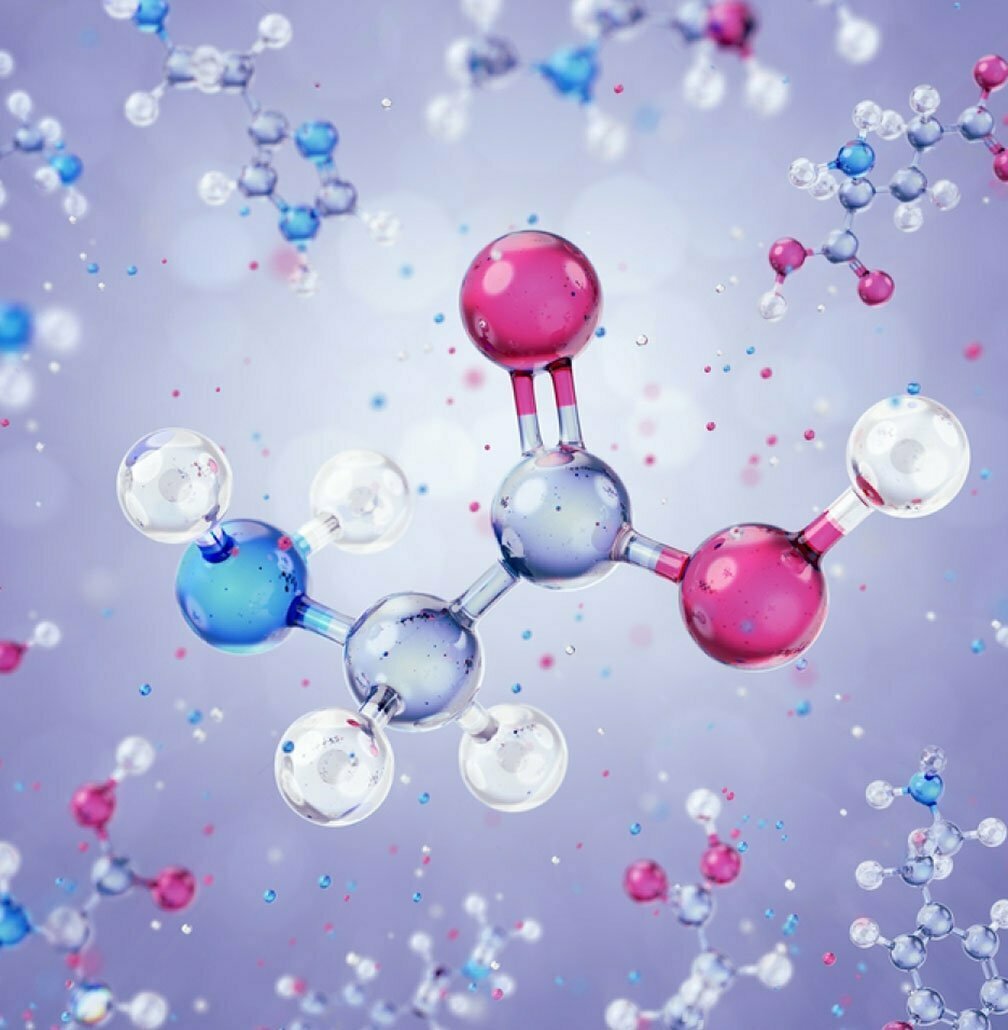
Amino acids are organic compounds that serve as the building blocks of proteins, which are essential for many biological processes in humans, animals, and plants.
Amino acids play a critical role in many biological processes, including the growth, repair, and maintenance of tissues, as well as the production of enzymes, hormones, and neurotransmitters. They are also used as a source of energy when needed.
There are 20 different proteinogenic amino acids that are commonly found in proteins, each with its own unique chemical structure and properties. These amino acids can be mainly classified into three categories:
These are amino acids that cannot be synthesized by the body and must be obtained through the diet. There are nine essential amino acids, including histidine, isoleucine, leucine, lysine, methionine, phenylalanine, threonine, tryptophan, and valine.
Nonessential amino acids are amino acids that can be synthesized by the body. Yet they are obtained through diet and should be supplemented in case of deficiency and imbalance. Because all amino acids are functionally essential for the living organism . Nonessential amino acids are alanine, asparagine, aspartic acid, and glutamic acid.
Conditionally essential amino acids are amino acids that are normally non-essential but can become essential under certain conditions. These conditions can include growth periods, illness, injury, or certain medical conditions that increase the body's demand for specific amino acids. Although these amino acids are normally synthesized by the body, their production may be limited under certain conditions, making them conditionally essential. In these cases, they may need to be obtained through the diet or through supplements. Conditionally essential amino acids are arginine, cysteine, glutamine, glycine, proline, serine and tyrosine.
As building blocks of proteins, amino acids are truly the building blocks of life. The body cannot survive even missing one of twenty transcribing amino acids.
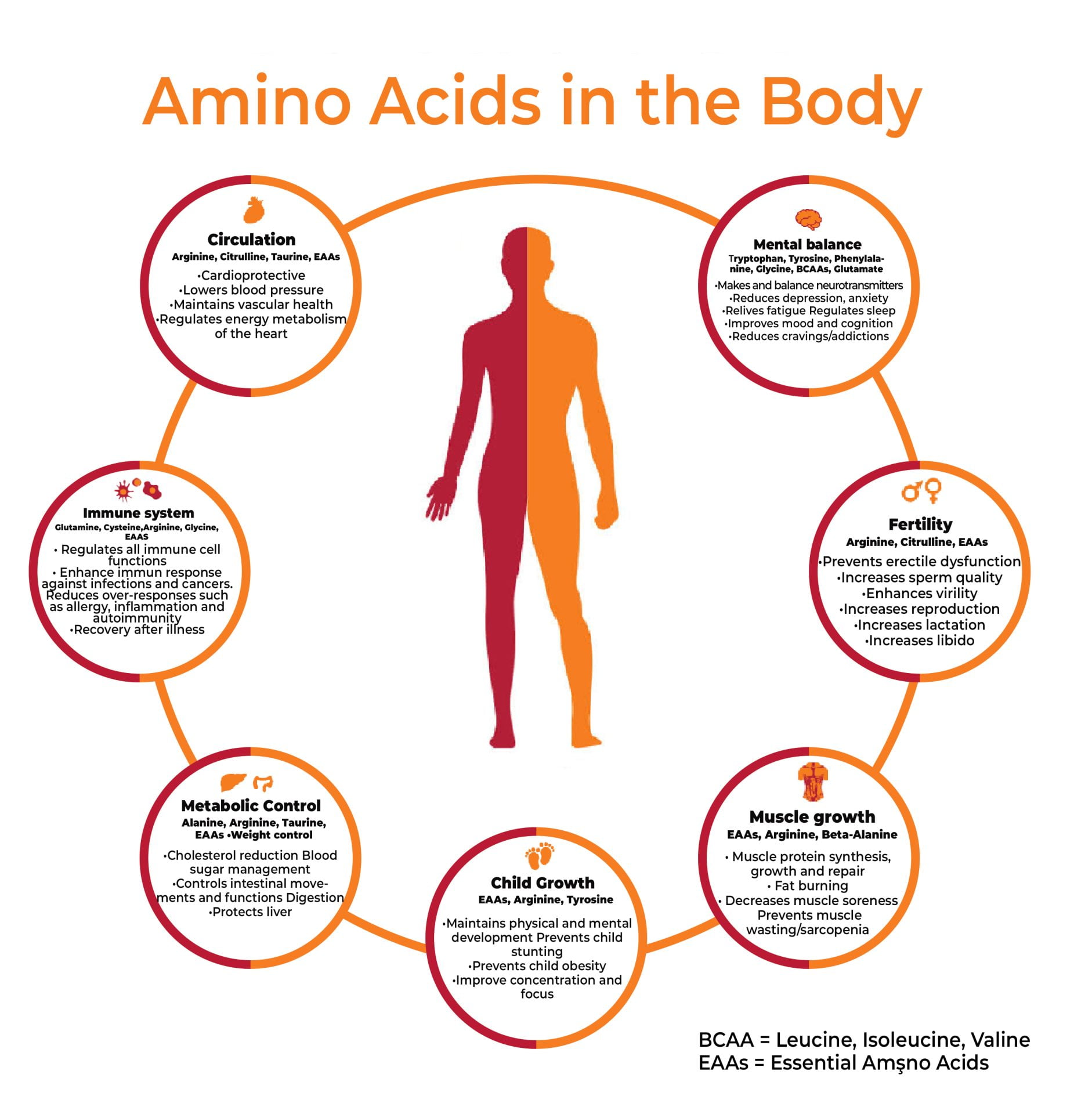
In addition to protein synthesis, individual amino acids flow into pathways that produce hormones and neurotransmitters, detoxify thousands of chemicals, supply antioxidant protection, and build bile acids for digestion.
Having low level of amino acids or an imbalance between them will lead to a range of health problems, depending on which amino acids are affected and the severity of the deficiency.
Most cellular functions, including cellular energy production
Enzyme production: Formation of all enzymes that regulate chemical reactions within our body
Immune proteins: Formation of antibodies, cytokines and all immune cells that fight infection and also confer upon us immunity from all internal and external insults
Contractile proteins: These proteins include actin, myosin, and troponin, which are found in muscle cells and play a crucial role in the contraction of muscles.
Structural proteins: These proteins play a critical role in maintaining the shape and function of cells, tissues, and organs, and are essential for normal physiological processes in the body. Few examples of a structural proteins are:
Collagen, which is found in connective tissues such as skin, tendons, and cartilage.
Keratin, which is found in hair, nails, and the outer layer of skin.
Elastin, which provides elasticity to tissues such as skin and blood vessels, and tubulin, which is a component of microtubules and is involved in the structure and function of cells.
Formation of hormones: All hormones are made up of amino acids. The steroid hormones (such as testosterone and estrogen) are derived from cholesterol, but are still synthesized via amino acid-based enzymes.
Transport proteins: Formation of blood proteins and hemoglobin (responsible for oxygen delivery to everybody tissue)
Neurotransmitter proteins: Formation of chemicals that help nerve conduction.
Poor growth and development: Amino acids are essential for the growth and development of tissues in the body. Deficiencies in certain amino acids, such as lysine or methionine, can lead to stunted growth and development in children.
Inborn metabolic diseases such as phenylketonuria (PKU) or maple syrup urine disease (MSUD).
Muscle wasting: Amino acids are also important for the maintenance of muscle tissue.
Impaired immune function: Amino acids play a role in the regulation of the immune system. Deficiencies in certain amino acids, such as glutamine, arginine, cysteine, tryptophan can impair immune function and increase the risk of infections.
Impaired cognitive function: Amino acids are involved in the production of neurotransmitters, which are important for brain function. Deficiencies in certain amino acids, such as tryptophan or tyrosine, can lead to cognitive impairment, mood disorders, and other neurological problems. The common problems are chronic fatigue, sleeping disorders, insomnia, craving, addiction, attention deficit, anxiety, and depression.
Anemia: Amino acids are involved in the production of hemoglobin, which is important for the transport of oxygen in the blood. Deficiencies in certain amino acids, such as iron or vitamin B12, can lead to anemia.
Metabolic disorders: Imbalances in amino acid levels can disrupt metabolic processes in the body such as obesity, insulin resistance, type2 diabetes, cardiovascular diseases. etc.

such as insulin resistance, type 2 diabetes, cardiovascular, diseases, obesity, depression, Alzheimer’s disease and more, years before diseases give symptoms.
Amino Acid Science Ltd pioneered a technique and evidence-based algorithm to undertake human amino acid profiling that enables a comprehensive physical, mental and nutritional checek-up and thereby providing personalized supplementation tailored to the needs of an individual.
Amino Check © 2023. All Rights Reserved .